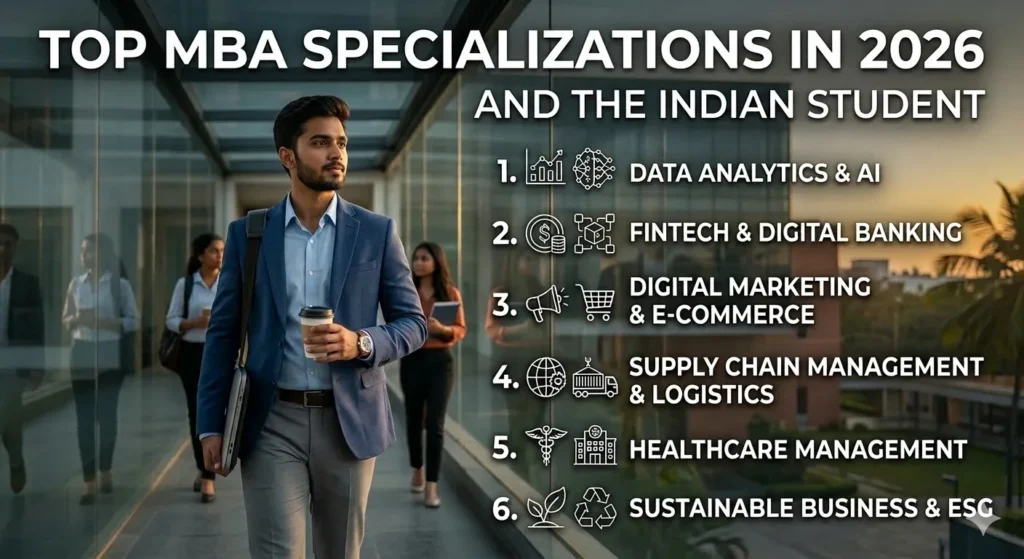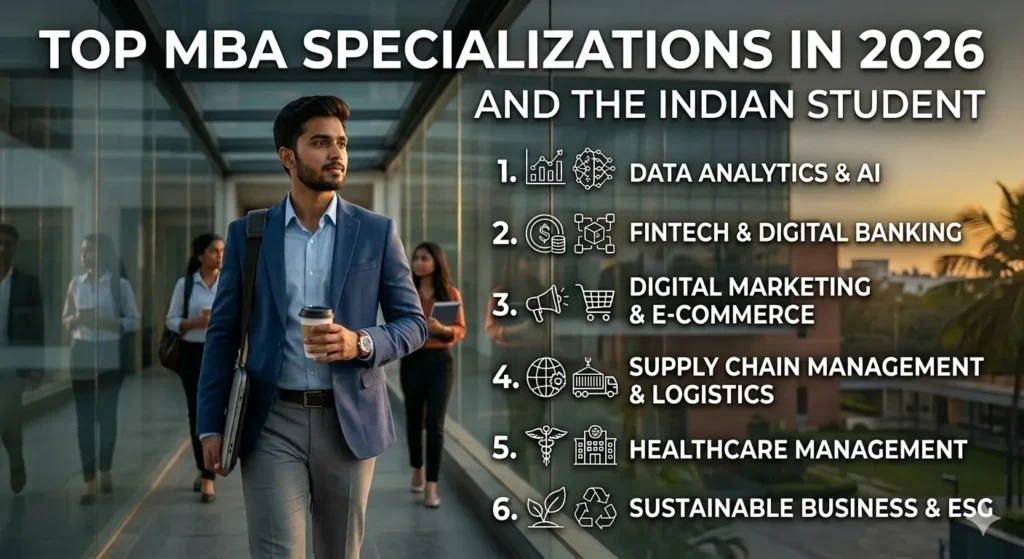
An MBA is a powerful degree, equipping graduates with the strategic thinking, leadership skills, and business acumen to excel in a competitive global marketplace. But in today’s rapidly evolving business landscape, a general MBA might not be enough. To truly stand out and target specific career aspirations, many students opt for an MBA specialization. This focused approach allows you to dive deep into a particular field, gaining specialized knowledge and skills that directly align with your professional goals.
Choosing the right MBA specialization can be a pivotal decision, shaping your career trajectory and opening doors to lucrative opportunities. With an increasing number of options available, from traditional finance and marketing to cutting-edge fields like artificial intelligence and fintech, understanding what each specialization entails is crucial. This guide will break down 15 popular MBA specializations, explaining their core curriculum, career prospects, and what makes them a valuable choice for ambitious professionals.
1. MBA in Finance
An MBA in Finance is a classic choice for those aspiring to work in the financial sector. This specialization delves into the intricacies of financial management, investment strategies, corporate finance, and financial markets. You’ll learn to analyze financial statements, manage investment portfolios, assess risk, and make informed financial decisions.
Core coursework often includes financial modeling, econometrics, derivatives, and international finance. Graduates are well-prepared for roles such as financial analyst, investment banker, portfolio manager, and financial planner. The demand for finance professionals remains consistently high, especially in areas like private equity, venture capital, and mergers and acquisitions. According to GMAC, finance is consistently among the top specializations employers seek.
Career Prospects and Salary Expectations
Finance MBAs are highly sought after by investment banks, commercial banks, hedge funds, and corporate finance departments. The average salary for an MBA in Finance can range significantly, often starting from $100,000 and potentially reaching well over $150,000 annually, with bonuses and other compensation. Top-tier finance roles can command even higher figures.
Who Should Pursue This Specialization?
This specialization is ideal for individuals with a strong aptitude for numbers, analytical thinking, and a keen interest in economic trends and market dynamics. If you’re drawn to understanding how money flows, how businesses are valued, and how to manage financial risk, an MBA in Finance could be your perfect fit.
2. MBA in Marketing
An MBA in Marketing equips you with the skills to understand consumer behavior, develop effective branding strategies, and drive business growth through targeted campaigns. This specialization goes beyond basic advertising, encompassing market research, digital marketing, product management, and sales strategy. You’ll learn how to identify market opportunities, craft compelling brand narratives, and measure the success of marketing initiatives.
Key subjects include consumer psychology, digital analytics, brand management, marketing strategy, and global marketing. Graduates can pursue roles like marketing manager, brand manager, product marketing manager, market research analyst, and digital marketing specialist. The marketing landscape is constantly evolving, with a growing emphasis on data-driven strategies and digital channels.
Career Prospects and Salary Expectations
Marketing MBAs are valuable to a wide range of industries, from consumer goods and technology to healthcare and entertainment. Typical roles include brand manager, marketing director, and digital marketing lead. Average salaries for marketing MBAs often fall between $90,000 and $140,000 per year, with senior leadership positions offering higher compensation.
Who Should Pursue This Specialization?
This track is best suited for creative thinkers with strong communication skills, an understanding of consumer psychology, and a passion for building brands. If you enjoy strategizing how to connect products and services with customers, and you’re excited by the dynamic nature of advertising and digital engagement, a marketing MBA is a strong choice.
3. MBA in Business Analytics
In an era defined by data, an MBA in Business Analytics is increasingly in demand. This specialization focuses on using data to drive strategic business decisions. You’ll learn to collect, analyze, and interpret large datasets to identify trends, predict outcomes, and optimize business processes. This involves mastering tools and techniques in areas like big data, data visualization, predictive modeling, and statistical analysis.
Coursework typically includes data mining, statistical modeling, data visualization tools (like Tableau or Power BI), and programming languages such as Python or R. Graduates are prepared for roles such as data analyst, business intelligence manager, data scientist, and analytics consultant. The ability to translate complex data into actionable business insights is a highly valued skill across all industries.
Career Prospects and Salary Expectations
The demand for business analytics professionals is soaring. Companies across all sectors are seeking individuals who can make sense of their data. Roles like Senior Business Analyst or Data Scientist can command salaries ranging from $100,000 to $160,000 or more, depending on experience and the complexity of the data involved.
Who Should Pursue This Specialization?
This specialization is ideal for individuals with strong quantitative and analytical skills, a logical mindset, and an interest in technology and data. If you enjoy problem-solving, uncovering patterns, and using data to inform strategy, this track offers a promising career path.
4. MBA in Human Resource Management (HRM)
An MBA in Human Resource Management focuses on the strategic management of an organization’s most valuable asset: its people. This specialization covers talent acquisition, employee relations, compensation and benefits, organizational development, and HR analytics. You’ll learn how to attract, develop, and retain top talent, foster a positive work culture, and ensure compliance with labor laws.
Curriculum often includes topics like strategic human capital management, organizational behavior, labor law, and HR technology. Graduates are well-suited for roles such as HR manager, talent acquisition specialist, HR business partner, compensation and benefits manager, and organizational development consultant. Effective HR management is critical for any organization’s success and employee satisfaction.
Career Prospects and Salary Expectations
HR professionals are essential in every organization. With an MBA in HRM, you can move into leadership roles. Typical positions include HR Director or VP of Human Resources. Salaries can range from $80,000 to $130,000 annually, with executive roles offering significantly higher compensation.
Who Should Pursue This Specialization?
This specialization is a great fit for individuals with strong interpersonal skills, empathy, and a passion for people development. If you are interested in shaping company culture, managing employee relations, and driving organizational effectiveness through human capital strategies, an MBA in HRM is an excellent choice.
5. MBA in International Business
In an increasingly globalized world, an MBA in International Business prepares you to navigate the complexities of cross-border commerce. This specialization covers global strategy, international marketing, foreign exchange management, international trade law, and global supply chains. You’ll gain an understanding of different cultural business practices, economic environments, and geopolitical factors that influence global operations.
Coursework often includes international finance, global market entry strategies, cross-cultural management, and international trade. Graduates are prepared for roles in multinational corporations, international organizations, and government trade agencies, such as international marketing manager, global supply chain analyst, export manager, or business development director.
Career Prospects and Salary Expectations
An international business focus opens doors to roles in global corporations, import/export businesses, and international consulting firms. Positions like Global Operations Manager or International Business Development Manager can earn between $95,000 and $150,000 annually. The ability to manage diverse teams and navigate international markets is highly valued.
Who Should Pursue This Specialization?
This track is ideal for individuals with a global mindset, an interest in different cultures, and a desire to work in multinational environments. If you are curious about how businesses operate across borders and want to contribute to global trade and economic relations, an MBA in International Business is a compelling option.
6. MBA in Operations Management
An MBA in Operations Management focuses on the efficiency and effectiveness of an organization’s production and service delivery processes. This specialization covers supply chain management, logistics, quality control, process improvement, and project management. You’ll learn how to optimize resource allocation, streamline workflows, and ensure that products and services are delivered on time and within budget.
Key areas of study include operations strategy, lean manufacturing, Six Sigma, inventory management, and operations research. Graduates are well-prepared for roles such as operations manager, supply chain manager, production manager, logistics coordinator, and operations consultant. Efficient operations are the backbone of any successful business.
Career Prospects and Salary Expectations
Operations management professionals are crucial for manufacturing, retail, healthcare, and technology companies. Roles like Operations Director or Supply Chain Vice President can earn salaries ranging from $100,000 to $170,000 annually. Expertise in optimizing complex systems is highly rewarded.
Who Should Pursue This Specialization?
This specialization is best suited for individuals who enjoy problem-solving, process optimization, and managing complex systems. If you have a knack for efficiency, logistics, and ensuring smooth operational flow, an MBA in Operations Management offers a practical and impactful career path.
7. MBA in Entrepreneurship
An MBA in Entrepreneurship is designed for aspiring founders and innovators, whether they aim to launch their own startups or drive innovation within established companies. This specialization focuses on developing the skills needed to identify market opportunities, develop business plans, secure funding, and scale ventures. It emphasizes creativity, risk-taking, and resilience.
Coursework often includes venture capital, new venture creation, innovation management, and entrepreneurial finance. Graduates may go on to found their own companies, join early-stage startups, or work in roles focused on innovation and new product development within larger organizations. Many business schools offer incubators and accelerators to support student ventures.
Career Prospects and Salary Expectations
While founding a startup can lead to significant financial rewards, it also carries inherent risks. Graduates may also pursue roles as venture capitalists, startup consultants, or innovation managers. Salaries can vary widely, from entry-level analyst positions to the potential for substantial returns from successful ventures.
Who Should Pursue This Specialization?
This track is perfect for individuals with a strong desire to create, innovate, and take calculated risks. If you have a business idea you’re passionate about or want to cultivate an entrepreneurial mindset within a corporate setting, an MBA in Entrepreneurship can provide the foundational knowledge and network to succeed.
8. MBA in Information Technology (IT)
An MBA in Information Technology, often called an MBA in Information Systems, bridges the gap between business strategy and technology management. This specialization focuses on how technology can be leveraged to achieve business objectives. You’ll learn about IT strategy, systems analysis, project management, cybersecurity, and data management, all within a business context.
Curriculum typically includes enterprise resource planning (ERP) systems, IT governance, digital transformation, and technology innovation. Graduates are prepared for roles such as IT manager, technology consultant, systems analyst, CIO (Chief Information Officer), and IT project manager. In today’s digital-first world, IT leaders are essential.
Career Prospects and Salary Expectations
The demand for IT leaders is exceptionally high. Roles like Chief Information Officer or VP of Technology can command salaries from $150,000 to $250,000 or more. Even mid-level IT management positions offer competitive compensation, often exceeding $100,000 annually.
Who Should Pursue This Specialization?
This specialization is ideal for individuals with a background or strong interest in technology who want to move into leadership and management roles. If you understand the power of technology to transform businesses and want to guide its strategic implementation, an MBA in IT is a fitting choice.
9. MBA in Healthcare Management
The healthcare industry is a massive and complex sector, and an MBA in Healthcare Management prepares professionals to lead within it. This specialization combines core business principles with an understanding of healthcare systems, policy, ethics, and operations. You’ll learn about healthcare finance, quality improvement, patient care management, and healthcare law.
Coursework often includes health economics, healthcare information systems, public health policy, and hospital administration. Graduates are well-suited for roles such as hospital administrator, healthcare consultant, clinic manager, health services director, and pharmaceutical manager. The need for skilled management in healthcare is growing rapidly.
Career Prospects and Salary Expectations
Healthcare management roles are critical for the efficient functioning of hospitals, clinics, and healthcare organizations. Positions like Healthcare Administrator or Director of Operations can earn between $90,000 and $150,000 annually. Leadership roles in larger healthcare systems can command even higher salaries.
Who Should Pursue This Specialization?
This track is perfect for individuals passionate about improving healthcare delivery and who possess strong management and leadership skills. If you are interested in the business side of medicine and want to make a tangible impact on patient care and organizational efficiency, an MBA in Healthcare Management is a rewarding path.
10. MBA in Digital Marketing
As businesses increasingly shift their focus online, an MBA in Digital Marketing has become a highly relevant specialization. This program dives deep into the strategies and tools used to promote products and services in the digital space. It covers search engine optimization (SEO), social media marketing, content marketing, pay-per-click (PPC) advertising, email marketing, and marketing analytics.
You’ll learn how to develop integrated digital marketing campaigns, analyze online consumer behavior, and measure the ROI of digital initiatives. Graduates are prepared for roles such as digital marketing manager, social media strategist, SEO specialist, content marketing manager, and growth hacker.
Career Prospects and Salary Expectations
Digital marketing expertise is in high demand across virtually all industries. Roles like Digital Marketing Director or Head of Growth can earn between $90,000 and $140,000 annually. Specialists in areas like SEO or paid advertising can also command strong salaries.
Who Should Pursue This Specialization?
This specialization is ideal for creative individuals with analytical minds who are fascinated by online trends and consumer engagement. If you enjoy developing online strategies, analyzing campaign performance, and staying ahead of the curve in the ever-changing digital landscape, this MBA track is a great fit.
11. MBA in Artificial Intelligence (AI) and Machine Learning (ML)
The integration of Artificial Intelligence and Machine Learning into business operations is transforming industries. An MBA specializing in AI and ML equips graduates with the knowledge to understand, implement, and manage AI-driven strategies. This involves learning about AI concepts, machine learning algorithms, data science principles, and the ethical considerations of AI in business.
Coursework may include AI strategy, data analytics for AI, machine learning applications, and AI ethics. Graduates are prepared for roles at the intersection of business and technology, such as AI product manager, machine learning strategist, data science lead, or AI consultant. The ability to harness AI for competitive advantage is becoming increasingly critical.
Career Prospects and Salary Expectations
The field of AI and ML is rapidly expanding, leading to high demand for professionals who can bridge the gap between technical AI capabilities and business needs. Roles like AI Product Manager or AI Strategy Lead can command salaries from $120,000 to $180,000 or more. The potential for growth in this area is immense.
Who Should Pursue This Specialization?
This specialization is best for individuals with a strong interest in technology, data, and the future of business. If you are excited by the potential of AI to solve complex problems and drive innovation, and you possess analytical and strategic thinking skills, this emerging field offers significant opportunities.
12. MBA in Supply Chain Management
An MBA in Supply Chain Management focuses on the end-to-end flow of goods and services, from raw materials to the final consumer. This specialization covers logistics, procurement, inventory management, demand planning, and global supply chain strategy. You’ll learn how to optimize efficiency, reduce costs, and ensure resilience in complex supply networks.
Key subjects include global logistics, operations research, procurement strategy, and supply chain analytics. Graduates are prepared for roles such as supply chain manager, logistics director, procurement specialist, operations analyst, and supply chain consultant. In today’s interconnected world, efficient supply chains are vital for business success.
Career Prospects and Salary Expectations
Supply chain professionals are essential in industries ranging from manufacturing and retail to healthcare and technology. Roles like Supply Chain Director or VP of Logistics can earn between $100,000 and $160,000 annually. Expertise in managing global and complex supply networks is highly valued.
Who Should Pursue This Specialization?
This track is ideal for individuals who enjoy planning, problem-solving, and managing complex systems. If you have a keen eye for detail, an interest in logistics, and a desire to ensure the smooth and efficient movement of goods, an MBA in Supply Chain Management offers a practical and in-demand career path.
13. MBA in Strategy and Consulting
An MBA in Strategy and Consulting prepares graduates for roles that involve advising organizations on how to improve their performance and solve complex business challenges. This specialization focuses on developing analytical thinking, strategic planning, problem-solving, and client management skills. You’ll learn frameworks for analyzing industries, competitive landscapes, and organizational structures.
Coursework often includes corporate strategy, competitive analysis, organizational change management, and strategic decision-making. Graduates are highly sought after by management consulting firms and corporate strategy departments. Roles include management consultant, strategy analyst, business analyst, and corporate planner.
Career Prospects and Salary Expectations
Consulting is a highly lucrative field for MBA graduates. Starting salaries at top management consulting firms can exceed $170,000 annually, with significant bonuses and opportunities for rapid career advancement. Corporate strategy roles also offer competitive compensation and high impact.
Who Should Pursue This Specialization?
This specialization is best for individuals with strong analytical and problem-solving abilities, excellent communication skills, and a desire to work on diverse business challenges. If you enjoy dissecting complex issues, developing strategic solutions, and advising senior leadership, a career in strategy or consulting could be ideal.
14. MBA in FinTech
FinTech, or financial technology, is rapidly disrupting traditional financial services. An MBA in FinTech equips graduates with the knowledge to navigate this evolving landscape, focusing on the intersection of finance and technology. This specialization covers areas like digital payments, blockchain technology, algorithmic trading, crowdfunding, and regulatory technology (RegTech).
You’ll learn about financial innovation, risk management in digital finance, and the business models of FinTech startups. Graduates are prepared for roles in FinTech companies, traditional financial institutions undergoing digital transformation, and venture capital firms focusing on the sector. Potential roles include FinTech product manager, blockchain analyst, payments strategist, and financial analyst specializing in technology.
Career Prospects and Salary Expectations
The FinTech sector is experiencing explosive growth, creating significant demand for skilled professionals. Roles in FinTech can offer competitive salaries, often ranging from $100,000 to $160,000 annually, with significant potential for growth as the industry matures.
Who Should Pursue This Specialization?
This track is ideal for individuals with a strong interest in both finance and technology. If you are excited by innovation in financial services, understand the potential of digital solutions, and want to be at the forefront of financial disruption, an MBA in FinTech offers a dynamic career path.
15. MBA in Sustainability
With growing global awareness of environmental and social issues, an MBA in Sustainability is becoming increasingly important. This specialization focuses on how businesses can operate in a way that is environmentally responsible, socially equitable, and economically viable. You’ll learn about corporate social responsibility (CSR), sustainable business practices, green finance, and environmental management.
Coursework often includes sustainable supply chains, environmental economics, impact investing, and corporate governance. Graduates are prepared for roles such as sustainability manager, CSR specialist, environmental consultant, or roles in impact investing and sustainable finance. Many companies are now creating dedicated sustainability leadership positions.
Career Prospects and Salary Expectations
The demand for sustainability professionals is rising as companies prioritize ESG (Environmental, Social, and Governance) initiatives. Roles like Sustainability Director or ESG Analyst can earn between $80,000 and $140,000 annually. This field offers the opportunity to drive positive change while building a successful career.
Who Should Pursue This Specialization?
This specialization is perfect for individuals who are passionate about environmental and social issues and want to integrate these concerns into business strategy. If you believe that businesses can be a force for good and want to lead organizations toward more responsible practices, an MBA in Sustainability offers a meaningful and impactful career.
Choosing the Right MBA Specialization for You
Selecting an MBA specialization is a significant decision that should align with your career aspirations, personal interests, and strengths. Consider the following:
- Career Goals: Where do you see yourself in five or ten years? Which specialization directly supports that vision? Research job descriptions and industry trends for your target roles.
- Personal Interests: What subjects genuinely excite you? You’ll be more motivated and successful if you’re passionate about your area of study.
- Strengths and Aptitude: Are you a natural with numbers, a creative storyteller, a strategic thinker, or a people person? Align your specialization with your innate talents.
- Market Demand: While passion is key, also consider the current and future demand for professionals in your chosen field. Research salary expectations and job growth projections.
- Program Curriculum: Look beyond the specialization title. Examine the specific courses offered, faculty expertise, and any practical components like internships or projects.
A specialized MBA can provide the focused expertise needed to excel in today’s dynamic business world. By carefully considering these factors, you can choose a path that not only enhances your marketability but also leads to a fulfilling and impactful career.
Conclusion
An MBA specialization offers a powerful way to tailor your business education to your unique career ambitions. Whether you’re drawn to the analytical rigor of finance and business analytics, the creative demands of marketing, the strategic challenges of consulting, or the innovative frontiers of AI and FinTech, there’s a specialization designed to equip you with the necessary skills. By understanding the core curriculum, career prospects, and ideal candidate for each track, you can make an informed decision that sets you on a path to success. Remember to align your choice with your long-term goals, personal interests, and market demand to maximize the return on your MBA investment. The right specialization is more than just an academic choice; it’s a strategic move toward shaping your future as a leader in the business world.